
Summarize with
Homeowners can identify if a deck requires painting or staining by looking for visible peeling, wood discoloration, or water that soaks into the boards rather than beading on the surface. Most wood decks require a fresh coat of sealant or paint every two to three years to prevent structural rot and UV damage. Identifying these issues early prevents small cosmetic problems from turning into expensive structural repairs that require full board replacements.
This guide provides a professional look at the physical indicators of wood fatigue and how to evaluate the current state of a deck. Supreme Painters & Remodelers brings years of experience in wood preservation to help property owners distinguish between surface-level wear and deep-seated damage. By recognizing these seven specific signs, residents can maintain their outdoor living spaces effectively and avoid the high costs of complete reconstruction.
Primary Indicators of Deck Wear
1. Peeling Paint on Deck
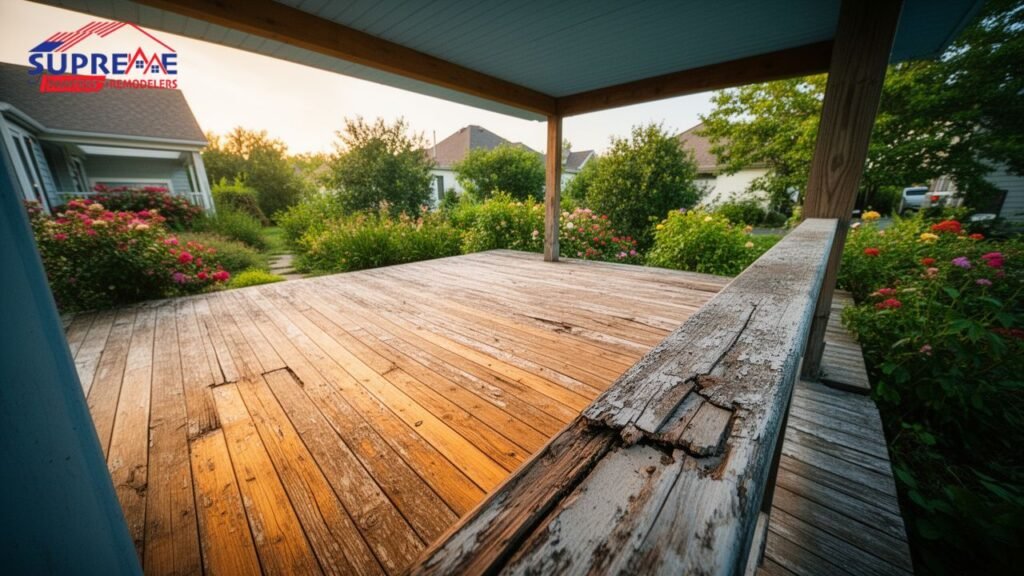
When paint begins to flake or peel, it indicates that the bond between the coating and the wood fibers has failed. This usually happens because moisture has trapped itself underneath the paint layer. As the wood expands and contracts with temperature changes, the brittle paint cannot keep up, leading to cracks and lifting. Peeling paint on deck surfaces is more than just an aesthetic issue; it leaves the underlying wood completely exposed to rain and sun.
Leaving these areas open leads to rapid wood degradation. If the paint is lifting in large sheets, it often suggests that the previous application occurred while the wood was too damp or that a primer was not used. Professional deck repair and painting services focus on removing all loose flakes and sanding the edges to ensure the new coat adheres properly to the healthy wood underneath.
2. Faded Deck Boards
Constant exposure to ultraviolet (UV) rays breaks down the lignin in wood cells. This process causes the rich color of the wood to turn a dull gray or silvery tone. While some people prefer the “weathered” look, faded deck boards are a sign that the protective UV inhibitors in the previous stain have worn away.
Without this protection, the wood becomes brittle and more prone to splintering. According to data from the North American Deck and Railing Association (NADRA), consistent maintenance is the primary factor in extending the lifespan of an outdoor wood structure beyond 15 years. Re-staining a faded deck restores the natural oils and provides a fresh barrier against sun-induced drying.
3. Deck Water Damage Signs
One of the most reliable ways to check a deck is the “splash test.” Homeowners should pour a small amount of water onto several areas of the deck, especially high-traffic spots. If the water beads up and sits on the surface, the sealant is still working. However, if the wood absorbs the water and turns dark within seconds, the protection is gone.
Deck water damage signs often manifest as persistent dampness or a “spongy” feel underfoot. Beyond these simple home tests, industry figures provided by InterNACHI suggest that a significant portion of deck failures are linked to moisture-related decay at connection points. Regular sealing prevents this internal moisture buildup.
4. Cracked Deck Wood Repair
Small surface cracks, known as “checking,” are normal as wood ages, but deep or wide cracks require immediate attention. Large splits allow water to penetrate deep into the center of the beam or board, where it cannot easily evaporate. This internal moisture leads to heartwood rot, which can compromise the safety of the entire structure.
Cracked deck wood repair involves filling smaller gaps with specialized wood fillers or replacing boards that have split through their entire thickness. Applying a high-quality solid stain or paint can help bridge minor cracks and prevent them from widening during the next freeze-thaw cycle.
Bonus Tip: If you can fit the edge of a nickel into a wood crack, it is deep enough to require a professional filler or a board replacement before you apply any new stain.
5. Deck Discoloration Causes
If a deck shows patches of black, green, or white, it is likely dealing with biological growth. Deck discoloration causes typically include mold, mildew, or algae. These organisms feed on the organic matter in the wood and the sugars in certain types of low-quality stains.
This growth does not just look bad; it makes the deck extremely slippery and dangerous when wet. A thorough cleaning with a specialized oxygen bleach solution is necessary before any painting or staining begins. Applying a new coat over mold will only trap the spores, allowing them to continue eating the wood from the inside out.
6. Accumulation of Chalky Residue
When a deck is finished with a solid stain or paint, the coating can eventually begin to “chalk.” If you run your hand across a railing and find a powdery residue on your skin, the binder in the paint has broken down. This is a clear signal that the coating is no longer a continuous film.
Chalking is a common result of long-term sun exposure. While the color might still look okay from a distance, the chalking indicates that the finish is eroding. Deck restoration contractors often use this sign to determine if a deck needs a full strip-down or just a light cleaning and a fresh topcoat.
7. Soft Spots and Visible Rot
This is the most severe sign that maintenance is overdue. Using a screwdriver or a dull knife, homeowners should gently poke areas of the deck that are close to the ground or near the house. If the tool sinks into the wood with little resistance, the wood is rotting.
Soft spots cannot be fixed with paint or stain. The affected wood must be removed and replaced. Once the structural integrity is restored, a comprehensive staining or painting project is necessary to protect the new and remaining old wood from future rot.
Comparing Protection Options
Choosing the right finish depends on the condition of the wood and the desired maintenance schedule. Supreme Painters & Remodelers suggests evaluating the following options:
| Feature | Transparent Stain | Semi-Transparent Stain | Solid Color Stain | Exterior Deck Paint |
| Appearance | Shows all grain | Shows some grain | Looks like paint | Solid, opaque color |
| UV Protection | Low | Moderate | High | Maximum |
| Longevity | 1 to 2 Years | 2 to 3 Years | 3 to 5 Years | 5+ Years |
| Maintenance | Easy to reapply | Moderate cleaning | Requires sanding | May require stripping |
| Best For | Brand new premium wood | Most residential decks | Older, weathered wood | Heavily worn surfaces |
Vital Evaluation Steps Before You Re-Coat
Before making a final decision on a product or hiring deck staining experts, there are several practical factors to weigh. Taking the time to evaluate the environment ensures the new finish lasts as long as possible.
- Check the Weather Window: Most stains require at least 48 hours of dry weather and temperatures between 50 and 90 degrees Fahrenheit. Applying the product during high humidity or direct midday sun can cause the finish to dry too quickly or bubble.
- Evaluate Previous Coatings: You cannot easily put a transparent stain over a solid one. Identifying what is currently on the wood determines the amount of preparation work required. Stripping old paint is labor-intensive and increases the project cost.
- Assess Wood Age: New “green” pressure-treated wood often needs to “season” for several months before it can accept a stain. If the wood is too new, the chemicals inside will push the stain back out.
- Safety Inspection: Always check the ledger board (where the deck meets the house) and the joist hangers for rust or loose bolts. A beautiful coat of paint will not save a deck that is structurally failing. Research from HomeAdvisor indicates that professional deck inspections often reveal hidden hardware issues that painting alone cannot fix.
Bonus Tip: Use a moisture meter to check the wood. Professional deck staining experts wait until the moisture content is below 15% before applying any product to ensure the best possible adhesion.
Understanding Your Wood Surface
Homeowners often ask how to tell if the deck needs sealing when the wood looks generally healthy. Beyond the splash test, look at the grain. If the wood fibers look “fuzzy,” it is a sign that the wood is drying out and losing its internal binders. This happens frequently with cedar and redwood.
When you decide when to repaint the deck surfaces, consider the foot traffic. Stairs and paths leading to the door will always wear down faster than corners. If those high-traffic areas are showing bare wood, the entire deck is likely at risk. Maintaining a deck is a proactive task rather than a reactive one. Waiting until the wood is grey and cracking means more work and more money spent on cleaners and heavy-duty sanders.
Common Questions About Deck Care
How often should I realistically stain my deck?
Most professionals recommend a maintenance cycle of two to three years. However, decks with full southern exposure or those in snowy climates may need attention every 18 months. Horizontal surfaces like floorboards wear out much faster than vertical surfaces like railings.
Can I paint over a deck that was previously stained?
Yes, you can apply paint or a solid color stain over an old semi-transparent stain, provided the surface is clean, and the old stain is no longer “oily.” You must sand the surface first to create a “profile” that allows the paint to grip the wood.
Why is my deck turning green so fast?
A green tint is usually algae or moss. This happens most often in shaded areas or parts of the deck that stay wet because of poor drainage or nearby overhanging trees. Regular cleaning is the only way to prevent this from returning.
Is it better to power wash or sand a deck?
Power washing is effective but dangerous in inexperienced hands. High pressure can “fuzz” the wood or leave gouges. Sanding is the preferred method for a smooth finish and better stain penetration, though it is more time-consuming.
Summary of Maintenance Needs
Maintaining a deck involves more than just a fresh coat of color. It is a process of protecting a significant home investment from the elements. By watching for peeling, fading, and water absorption, you can catch damage before it becomes structural. Regular inspections and the “splash test” are the best tools for any property owner. Evaluating the condition of the wood and choosing the right product for the wood’s age will ensure the deck remains a safe and beautiful space for years to come.
Professional Deck Care Support
Maintaining an outdoor structure requires specific tools and knowledge of wood chemistry. For those looking for expert assistance, Supreme Painters & Remodelers provides comprehensive deck repair and painting services. Whether the project involves simple staining or complex wood restoration, professional help ensures the job is done correctly.
You can reach Supreme Painters & Remodelers at (617) 888-9052 or via email at omar@supremepainter.remodelers.com for questions regarding your specific deck condition.
Sources
- North American Deck and Railing Association (NADRA) – A leading authority on deck safety, building codes, and maintenance standards.
- InterNACHI – An international association of certified home inspectors providing technical data on structural wood rot and deck failure causes.
- HomeAdvisor – A platform providing market data on the costs and common requirements for deck maintenance and restoration.