
Summarize with
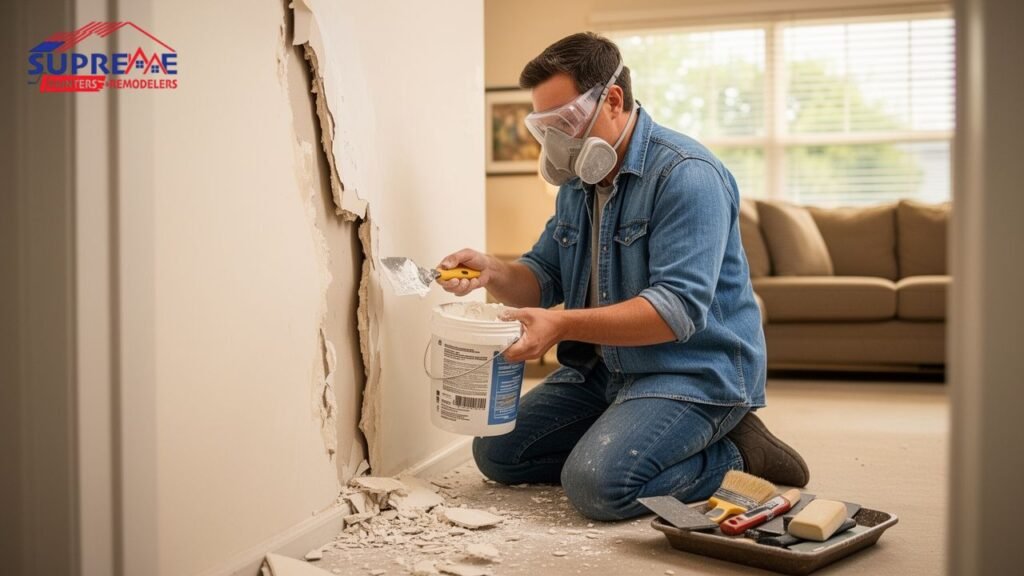
Repairing drywall involves identifying the size of the damage and applying the correct patching technique to restore a flat, paintable surface. Small dents and nail holes require a simple application of lightweight spackle, while larger holes demand a support structure like a mesh patch or a new piece of drywall screwed into wooden backer boards. Successful drywall repair depends on the “feathering” technique, where joint compound is spread increasingly thin away from the center of the patch to create an invisible transition.
This guide provides a comprehensive walkthrough for fixing various types of wall damage, from minor scuffs to significant holes. Homeowners can achieve professional results by following these structured stages. Supreme Painters & Remodelers maintains high standards for wall preparation to ensure that final paint applications look flawless and last for years.
Tools and Materials for Success
Having the right equipment is the first step toward a successful drywall patch repair. Using the wrong size knife or a low-quality compound can lead to visible ridges and uneven textures.
|
Tool or Material |
Purpose |
Best For |
|
6-inch Taping Knife |
Spreading and smoothing joint compound |
Small to medium holes |
|
12-inch Taping Knife |
Feathering edges for a seamless finish |
Large patches and joints |
|
Self-Adhesive Mesh Tape |
Providing structural strength to the patch |
Holes 1 to 4 inches wide |
|
Joint Compound (Mud) |
Filling and leveling the damaged area |
All drywall repair types |
|
Sanding Sponge (Fine) |
Smoothing the dried compound |
Final finishing |
|
Utility Knife |
Cutting drywall and cleaning hole edges |
Large hole preparation |
Repairing Small Dents and Nail Holes
Small imperfections are the most common type of damage in residential properties. These typically occur from hanging pictures or moving furniture.
To fix these, start by removing any loose debris or paper from the hole using a utility knife. Applying spackle to a dirty or ragged surface inhibits proper adhesion. Use a small putty knife to press lightweight spackle into the hole. Swipe the knife across the surface in one direction to fill the void, then swipe in the opposite direction to remove excess material.
Lightweight spackle dries quickly, usually within 30 minutes. Once dry, sand the area lightly with a fine-grit sanding sponge. If the spackle shrinks and leaves a small divot, apply a second thin coat. This specific drywall repair method ensures that the fix remains invisible once the wall is painted.
Bonus Tip: Avoid over-sanding. Too much pressure can scuff the surrounding paper of the drywall, making it difficult to hide the repair with paint later.
Fixing Medium Holes with Mesh Patches
Holes caused by door handles or accidental impacts often range from two to four inches. These require more support than spackle alone can provide.
A self-adhesive mesh patch is the standard solution for this scale of drywall repair. Place the patch over the hole, ensuring it overlaps the solid drywall by at least an inch on all sides. Apply a layer of all-purpose joint compound over the mesh using a 6-inch knife. The goal is to press the mud through the mesh to grip the edges of the hole.
Spread the compound so it extends several inches past the edges of the patch. This creates a gentle slope that hides the thickness of the mesh. After the first coat dries, apply a second, wider coat with a 12-inch knife. This wider application is essential for professional drywall repair results, as it blends the patch into the rest of the wall.
Managing Large Damage with Backer Boards
Large holes, such as those caused by plumbing repairs or significant accidents, require a new section of drywall. This process is often called a “back-blocked” patch or a “plug” repair.
Cut the damaged area into a clean square or rectangle using a drywall saw. Cut a new piece of drywall to match these dimensions exactly. To hold the new piece in place, insert small wooden strips, like 1×3 lumber, behind the existing drywall. Screw these strips into the wall so they span across the opening.
Place the new drywall piece into the hole and screw it into the wooden supports. Apply joint tape over the seams where the new and old drywall meet. Cover the tape with joint compound, feathering the edges outward. According to data from HomeAdvisor, the average cost of professional drywall repair services for large sections can range from $300 to $900, depending on the complexity and texture matching required.
Drywall Crack Repair Techniques
Cracks often appear above doors, windows, or in corners due to the natural settling of a home. Simply filling these cracks with caulk or spackle is a temporary fix that often fails within months.
For a permanent drywall crack repair, widen the crack slightly with a utility knife to create a “V” shape. This gives the joint compound more surface area to grip. Apply fiberglass mesh tape over the length of the crack. Cover the tape with a thin layer of setting-type compound, which is stronger than standard air-dry mud. A setting-type compound undergoes a chemical reaction to harden, making it more resistant to future movement. Sand the area and apply a finishing coat of regular joint compound to smooth the texture.
Things to Consider Before Making a Decision
Before starting a repair project, evaluate the scope of the work to decide if it is a DIY task or if it requires professional assistance.
- Texture Matching: If the walls have a specific texture like knockdown or orange peel, matching it perfectly is difficult for beginners. Professional drywall repair services use specialized sprayers to mimic existing textures.
- Structural Issues: If cracks keep reappearing in the same spot, there may be an underlying foundation issue. Patching the drywall will not solve the structural problem.
- Safety Hazards: Walls containing electrical wiring or plumbing require extreme caution. Accidentally cutting a wire while repairing drywall holes can lead to injury or fire.
- Time and Dust: Drywall work is messy. Sanding creates fine dust that travels through the home. Professionals use dust-containment systems and vacuum-attached sanders to keep the environment clean.
Bonus Tip: Use a bright flashlight or work light held at an angle against the wall after sanding. This “side-lighting” reveals small bumps or scratches that are invisible under normal overhead lighting.
Market Realities of Wall Maintenance
Maintaining wall surfaces is not just about aesthetics; it impacts property value. A study by the National Association of Realtors indicates that interior home improvements, including fresh paint and wall repairs, provide some of the highest returns on investment for homeowners looking to sell.
|
Factor |
DIY Approach |
Professional Service |
|
Initial Cost |
Low (Tools and mud) |
Moderate (Labor and materials) |
|
Time Investment |
High (Multiple drying days) |
Low (Efficient scheduling) |
|
Quality of Finish |
Variable |
Guaranteed smooth or matched |
|
Mess Management |
High cleanup required |
Minimal (Dust containment used) |
Professional drywall installation and repair ensure that the seams are strong enough to withstand the vibrations and temperature changes common in residential buildings. High-quality repairs prevent the “popping” of nails and the cracking of joints that often plague lower-quality installations.
Common Questions About Patching Walls
Homeowners often ask about the difference between spackle and joint compound. Spackle is best for tiny holes because it shrinks less and dries faster. Joint compound is better for larger areas because it is easier to sand over long stretches and provides a smoother finish for painting.
Another frequent concern involves the drying time. While a thin layer of mud might look dry in an hour, it may still contain moisture. Painting service over damp compound leads to bubbling and peeling. Always wait until the compound turns from a dark gray to a bright, chalky white before sanding or painting.
Frequently Asked Questions
Can I use mesh tape for all types of drywall repair?
Mesh tape is excellent for flat surfaces and small holes because it is self-adhesive. However, for inside corners, paper tape is the better choice. Paper tape has a center crease that allows it to fit perfectly into corners without bunching, providing a sharper and more professional look.
How do I fix a hole if I do not have a piece of spare drywall?
For holes smaller than four inches, a “California Patch” or “Butterfly Patch” is an option. This involves using a piece of drywall larger than the hole and removing the gypsum from the edges while leaving the paper backing intact. The paper acts as the tape, holding the patch in place.
Why is my drywall patch still visible after painting?
Visibility usually occurs due to poor feathering or a failure to prime. If the joint compound is not spread far enough from the center, a “hump” remains on the wall. Additionally, joint compound is more porous than the rest of the wall. Without a dedicated primer, the paint will soak into the patch differently, creating a dull spot known as “flashing.”
Is it necessary to use a sanding mask?
Yes. Drywall dust consists of very fine particles that can irritate the respiratory system. Even for small drywall patch repair jobs, wearing an N95-rated mask is a standard safety practice to prevent inhaling dust.
Summary of Best Practices
Effective drywall maintenance requires patience and the right materials for each specific type of damage. Small holes are easily managed with spackle, while larger structural repairs demand the use of backer boards and joint tape. The most important stages are the application of thin, feathered layers of compound and thorough sanding between coats. Proper priming before the final paint application ensures that the repair remains invisible. Homeowners should assess their comfort level with dust management and texture matching before starting significant projects.
Supreme Painters & Remodelers Professional Support
Maintaining the integrity of interior walls is a fundamental part of home care. Supreme Painters & Remodelers provides expert solutions for homeowners who require a flawless finish without the stress of managing dust and complex textures. For assistance with residential projects, contact the office at (617) 888-9052 or reach out via email at omar@supremepainter.remodelers.com to discuss specific needs. Whether handling a single room or a full property update, the focus remains on delivering high-quality results that stand the test of time.
Sources
- HomeAdvisor – Provides comprehensive data on the national average costs for professional drywall repair and installation services.
- National Association of Realtors – Offers insights into how interior home maintenance and wall conditions impact overall property value and marketability.
- Family Handyman – A professional resource for technical steps and tool recommendations for various types of residential wall repairs.