
Summarize with
The main difference between interior and exterior paint lies in the chemical formulation of resins and additives. Interior paint uses harder resins to resist staining and scrubbing, while exterior paint uses flexible resins to survive temperature swings and moisture. Neither option is objectively better than the other because they serve entirely different purposes. Using the wrong type leads to premature failure or health risks. Interior paint will crack and peel quickly if used outside, and exterior paint can release harmful chemicals for months if used in an enclosed room.
Selecting the correct product requires understanding how ingredients like pigments, binders, and solvents react to specific environments. This guide uses field data and material science to break down the technical specifications of each paint type. Supreme Painters & Remodelers uses these industry standards to ensure every surface receives the appropriate coating for long-term durability. Knowing these distinctions prevents costly mistakes during home improvement projects.
Chemical Composition and Performance
Paint consists of four primary ingredients: pigments, binders, solvents, and additives. In interior formulations, the binder is engineered to be rigid. This hardness allows homeowners to wipe away fingerprints or dirt without damaging the finish. Interior paints also contain higher levels of pigment and fewer solvents, which helps them cover wall imperfections more effectively. Furthermore, these interior formulations are designed for rapid evaporation, allowing for significantly faster drying times than outdoor alternatives. For professional results and expert guidance, consider interior painting services.
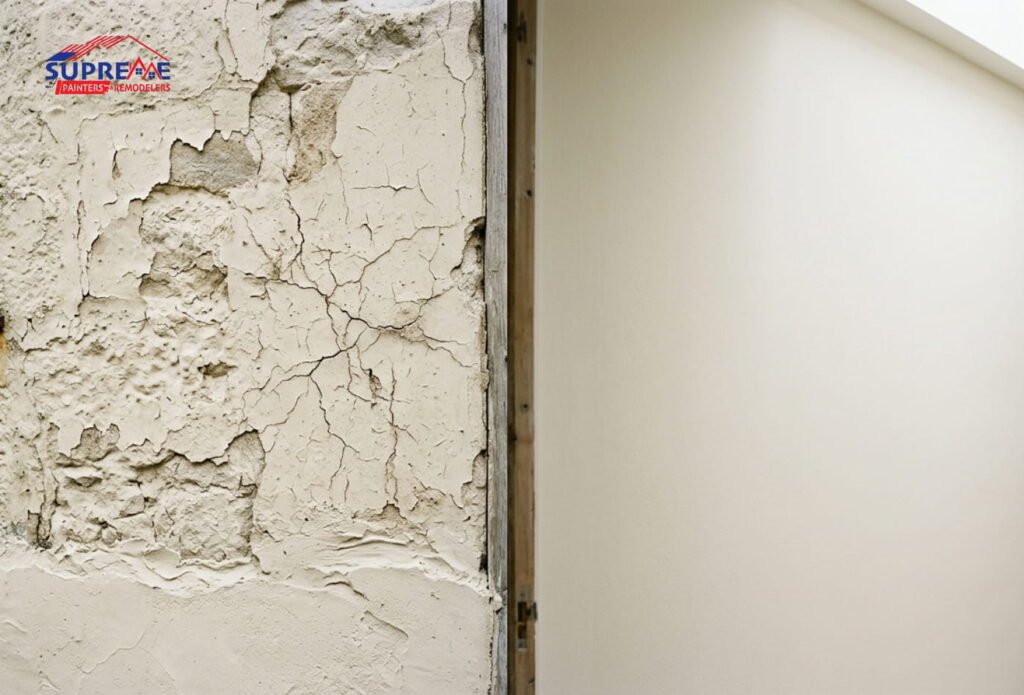
Exterior paints require a different approach. Because outdoor surfaces expand and contract with the sun and cold, the binder must remain flexible. If the resin is too hard, the paint will become brittle and flake off as the siding moves. According to technical data from the American Coatings Association, exterior coatings are also designed to withstand UV radiation, which otherwise breaks down the chemical bonds in paint and causes fading.
The Role of Additives
Additives provide specific protections based on the environment. Exterior paints frequently include fungicides and algaecides to prevent mildew growth in damp conditions. They also feature UV blockers to maintain color integrity under direct sunlight. Interior paints skip these chemicals to focus on indoor air quality. Instead, they include additives that improve flow and leveling, which ensures a smooth finish with fewer brush marks.
Technical Comparison of Interior and Exterior Coatings
The following table outlines the specific characteristics that define how these two paint types perform over time.
| Feature | Interior Paint | Exterior Paint |
|---|---|---|
| Primary Resin | Hard Acrylic/Epoxy | Flexible Acrylic/Oil-Based |
| Primary Goal | Scrubbability and Aesthetics | Weather Resistance and Flexibility |
| VOC Levels | Low to Zero | Often Higher |
| Resistance | Stains and Scuffs | UV Rays, Mildew, and Moisture |
| Cure Time | Fast (2-4 hours) | Longer (24-48 hours) |
| Surface Prep | Minimal (Clean and Dry) | Extensive (Scraping and Priming) |
Health Standards and Indoor Air Quality
Indoor air quality is a significant factor in paint selection. Volatile Organic Compounds (VOCs) are gases emitted from certain solids or liquids, and they can have adverse health effects. Most interior paints today are formulated to be Low-VOC or Zero-VOC to comply with safety standards. Data published by the Environmental Protection Agency suggests that VOC levels are often much higher indoors than outdoors, making the choice of interior-specific paint essential for health.
Exterior paints often contain higher VOC levels because the gases dissipate quickly in the open air. These chemicals are necessary to keep the paint liquid during application in various temperatures. If someone uses exterior paint inside a bedroom, those gases remain trapped, potentially causing headaches, dizziness, or respiratory issues for the occupants.
Bonus Tip: Never use exterior paint in a basement or crawlspace thinking the “mildew resistance” is a benefit. The lack of ventilation will keep the chemical odors trapped for an extended period, creating a safety hazard.
Market Trends and Environmental Impact
This focus on safety and performance is reflected in current industry data. The demand for specialized coatings is growing as consumers prioritize both performance and sustainability. A market analysis by Grand View Research indicates that the architectural coatings market is shifting toward water-based technologies that offer the durability of oil-based paints without the environmental drawbacks. This shift has made high-quality interior paints more durable than ever before, narrowing the gap in raw strength while maintaining safety.
Things to Consider Before Making a Decision
Before purchasing a gallon of paint, evaluate the specific needs of the project. A “one-size-fits-all” mentality usually results in a finish that fails within two years.
Surface Material
Exterior paints must adhere to wood, vinyl, masonry, or metal, all of which move differently. Interior paints are mostly designed for drywall, plaster, and wood trim. Ensure the paint label specifically mentions the substrate of the project.
Exposure to Moisture
Bathrooms and kitchens are high-moisture interior areas. While it might be tempting to use exterior paint for its moisture resistance, a high-quality “kitchen and bath” interior paint is a better choice. These products offer moisture protection while remaining safe for indoor breathing.
Expected Longevity
Exterior paint on the sunny side of a house might only last five to seven years before needing a refresh. Interior paint in a low-traffic guest room could last fifteen years. Budgeting should account for the fact that exterior surfaces require more frequent maintenance due to environmental stress.
Bonus Tip: If painting a door, use interior paint on the inside face and exterior paint on the outside face. This allows the door to breathe properly and prevents the interior side from sticking to the frame.
Common Questions About Paint Selection
Distinguishing between these products often leads to questions about specific scenarios. Many homeowners wonder if they can mix the two types or use “leftover” exterior paint for interior trim.
Using leftover exterior paint for baseboards might seem economical, but the finish is usually too soft for indoor use. It will attract dust and pet hair, which then becomes embedded in the paint film. Conversely, using interior paint for a porch railing will result in the paint washing away or peeling after the first major rainstorm. The adhesives in interior paint are water-soluble until fully cured, and even then, they cannot handle the saturation that occurs outdoors.
Addressing Frequent Concerns
Can interior paint be used outdoors if it is covered by a porch?
No. Even if direct rain does not hit the paint, humidity and temperature fluctuations will cause interior paint to fail. The lack of UV blockers also means the color will fade significantly within months of exposure to ambient light.
Is exterior paint more durable than interior paint?
“Durability” is relative. Exterior paint is more durable against rain and sun. Interior paint is more durable against physical touch, scrubbing, and household cleaners. Neither is universally tougher.
Why does exterior paint smell stronger than interior paint?
Exterior formulations use different solvents and fungicides that are not required to meet the same indoor “odorless” standards. These chemicals are designed to evaporate into the atmosphere, not settle into carpets and furniture.
Does the finish affect the choice between interior and exterior?
Yes. Both types come in various sheens, like flat, eggshell, and gloss. However, glossier finishes are generally more durable in both categories. For exterior surfaces, a satin or semi-gloss finish helps shed water more effectively than a flat finish.
Evaluating Long-Term Goals
Successful painting depends on matching the product to the environment. Interior paint provides a safe, scrubbable surface that enhances the beauty of living spaces without compromising air quality. Exterior paint acts as a protective shield, flexing with the structure and warding off biological growth.
Supreme Painters & Remodelers recommends inspecting surfaces annually to identify early signs of wear. Proper identification of paint types ensures that the investment in a home stays protected. Before starting a project, always read the manufacturer’s technical data sheet to confirm the intended use and cure requirements. This attention to detail separates a professional-grade finish from a temporary fix.
Expert Painting Solutions
Selecting the right materials is the first step toward a lasting finish. Supreme Painters & Remodelers provides professional guidance and application services for both residential and commercial properties. For detailed consultations or to schedule an assessment of specific painting needs, contact the team directly. Reach out via phone at (617) 888-9052 or send an email to omar@supremepainter.remodelers.com to speak with a specialist.
Sources
- American Coatings Association – A leading organization providing technical research and industry standards for paint formulations and safety.
- Environmental Protection Agency – A federal agency that provides data on VOC regulations and the impact of paint chemicals on indoor air quality.
- Grand View Research – A global market research firm that tracks trends and growth within the architectural and industrial coatings sectors.